Guides
Commercial Cleaning RFP Response: Walkthrough Steps
A commercial cleaning RFP response starts with the walkthrough: room-by-room notes, fixture counts, and written exclusions that keep labor lines honest.
What to take away
- Underpricing starts when walkthrough notes ignore hard-to-clean surfaces, entry restrictions, and shift timing.
- A winning commercial cleaning RFP response separates scope facts from assumptions and uses the walkthrough to support every labor line.
- Check each step with a visible or measurable artifactan annotated floor plan, a completed route card, a signed scope sheet.
- Stop and hand to a professional when the building has regulated waste, confined spaces, or requires performance bonding beyond your current capacity.
A facility manager reviewing a commercial cleaning RFP checks if the walkthrough produced specific notes, not if the cover letter sounds confident. The Bureau of Labor Statistics publishes state-by-state wage data for janitors.
Check a bid floor against recorded wages instead of guessing. The Bureau of Labor Statistics' Occupational Employment and Wage Statistics program reports pay for janitors and cleaners under occupation code 37-2011, broken out by state and metro area, and that is the page to use before setting a labor rate for a Texas or Illinois building. Pull the estimate for the state the building sits in, not a national average. That step alone prevents a common mistake: quoting an office rate for a medical clinic that needs three times the restroom fixtures per square foot.
What has to be true before the first step
You need the RFP, the building drawings or floor plans, a camera or phone, a measuring wheel, and a blank room-by-room log. You also need the facility manager's representative to walk with you, because closed doors and locked mechanical rooms become assumptions otherwise. A defensible RFP response starts with the line items you would use in a commercial cleaning business quote, but it replaces placeholder rates with observed conditions. Before the walkthrough, mark every area on the floor plan that the RFP mentions but that you cannot enter. Those areas become exclusions, not vague promises.

What has to be true
| Precondition | What it prevents |
|---|---|
| Signed site access confirmation | Losing the walkthrough time to a locked lobby |
| Room schedule from the RFP | Missing restrooms, stairwells, or loading docks |
| Measuring wheel and phone camera | Relying on square footage from a marketing brochure |
| Facility rep present | Underestimating special surfaces like terrazzo or epoxy |
The sequence
- Read the RFP scope line by line and list every room type named: restroom, breakroom, conference room, lab, corridor.
- Walk the route in the order a cleaner would work it, not the order the rooms appear in the RFP.
- At each room, note floor type, fixtures, trash volume, high-touch points, and any barrier to entry.
- Measure the actual square footage or count rooms, and record what cannot be measured.
- After the walkthrough, convert the notes into a route card, a fixture count, and a scope sheet with exclusions.
The sequence only works if you stop at every door. When a room is locked, write 'not observed' on the log and photograph the door with the room number. That visible note tells the evaluator you did not price an unknown. The same discipline applies as in quality control, where a checklist beats memory.
Walkthrough Sequence
- Read RFP scope line by line
- Walk route in cleaner order
- Note floor, fixtures, trash, barriers
- Measure square footage or count rooms
- Convert notes to route card and scope
The step that decides the result
The deciding step is the fixture and surface count, not the total square footage. One 20,000-square-foot office with 12 restrooms and a cafeteria is priced differently from another with 4 restrooms and no food service. A facility manager can smell a lowball because the labor minutes per fixture do not match the walkthrough. Count sinks, urinals, toilets, mirrors, soap dispensers, and high-touch door handles. Write each number next to the room on your floor plan.
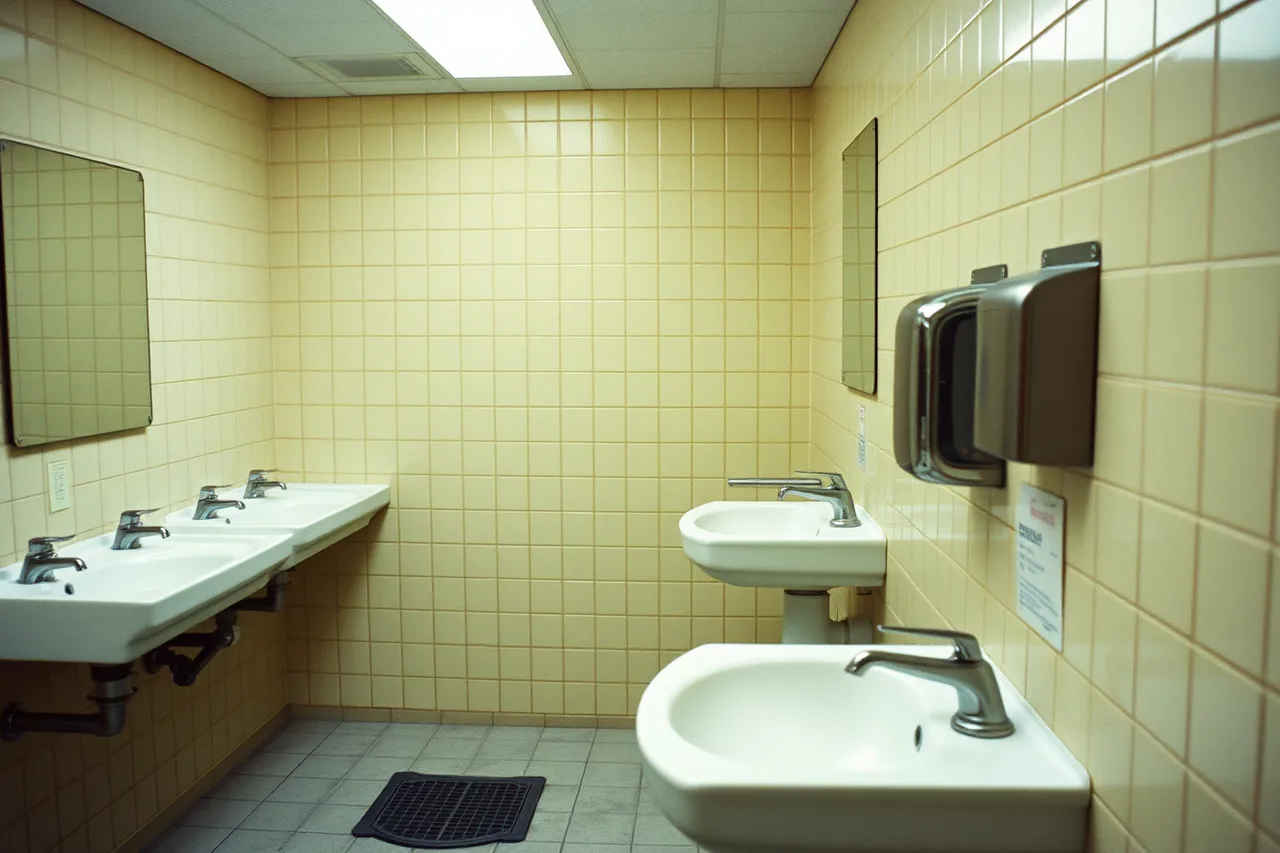
When those counts are missing, the bid cannot survive a line-item review. A route card built from the walkthrough, not from the RFP summary, is the only artifact that supports your labor line. That check matches the same logic as training a new commercial cleaning business employee, where a named task must have a named result.
How to check each step came out right
- The floor plan has a route code and fixture count for every room named in the RFP.
- The square footage you priced matches the measuring wheel total within 5 percent of the drawing.
- The route card lists every restroom and breakroom count from the walkthrough, not from the RFP cover page.
- The scope sheet marks each locked or inaccessible room as excluded or scheduled for a second visit.
What to do when a step goes wrong
The common failure is a walkthrough that records 'clean all areas' instead of room-specific notes. Recovery is a second site visit. Ask the facility rep to open the locked spaces, then use the RFP's room schedule to mark each room with a route code. If the rep cannot open a mechanical room or lab, add a written exclusion that says those areas are not priced until access is provided. Do not average the unknown area into the bid. A vague scope is an underbid waiting to surface.
Stop the estimate and bring in a professional when the walkthrough reveals regulated waste, asbestos floor tile, lead paint, or confined-space entry. Those findings carry named rules in the United States: permit-required confined spaces under OSHA's standard at 29 CFR 1910.146, asbestos work under the EPA NESHAP rules at 40 CFR Part 61 Subpart M, and lead paint disturbance under OSHA's lead standard at 29 CFR 1910.1025. Stop as well when the building requires industrial hygienist air sampling, or when the solicitation demands a bid bond at submission and a performance bond at award that together exceed your current surety line.
Cornell Law School's Legal Information Institute explains in its contract law overview that an enforceable agreement needs terms clear enough to apply; if you cannot observe the space, you cannot write a clear scope. At that point, partnering with a licensed environmental or safety contractor protects the bid and the account.
FAR Part 15 requires offerors in negotiated federal procurements to submit adequate cost or pricing data, so a lowball number without walkthrough support will be challenged there. Large private buyers ask for the same backup even though the FAR does not govern them. It works like earning commercial cleaning referrals: a professional who says yes to everything eventually loses the account.
What the response itself has to include
Most commercial cleaning RFPs ask for the same core items in the package: a completed bid or pricing schedule on the buyer's own form, itemized labor and supply lines, certificates of insurance at the limits the RFP states, client references, and any licenses or certifications the scope calls for. Follow the submittal instructions exactly for deadline, format, and delivery method; a strong walkthrough attached to a late or incomplete package still scores as nonresponsive. If the solicitation is federal, the package also depends on the Service Contract Act wage determination the contracting officer attaches and on an active SAM.gov registration, without which the offer is not eligible for award.