
Guides
Quebec Facility Contracts: French-Language Basics
French-language rules for Quebec facility contracts: standard-form agreements, client and staff documents, signage, and OQLF enforcement.
What to take away
- Bill 96 makes French the default language of a standard-form cleaning contract in Quebec. The parties may choose to be bound by an English version only after receiving and reading the French version and expressly stating that choice; keep written evidence.
- The duty reaches past the contract to quotes, invoices, inspection forms, training material, safety data sheets and signage on vehicles and uniforms.
- Where a sign carries both languages, French must be markedly predominant. Equal billing does not meet the test.
- The OQLF enforces the Charter and may seek corrections when it finds a breach.
- Keep dated French versions, written language-choice records and training records. An inspector wants documents, not explanations.
What Bill 96 changed for cleaning firms
Bill 96 amended the Charter of the French Language in 2022 and moved French from a preferred language to the default one in many commercial settings. For cleaning companies, that affects facility contracts, including standard-form service agreements.
Most janitorial work in Quebec is sold on a standard-form contract, the kind a property manager signs without negotiating each clause. That form is exactly what the Charter targets. If your template is English-only, the fix is not a stamp at the bottom. It is a French original with a separate English counterpart.
Language is now a term of the deal, sitting beside scope, frequency and price. Get it wrong and the contract itself is exposed, not just your marketing.
Quebec language duties sit on top of the permits, insurance and registration work you already carry. The licensing and compliance layers are where those two stacks meet.
Contract language is not the only compliance layer. Depending on workforce size, the OQLF's francization process can involve registration, a francization program, a committee or a francization certificate. For corporate filings, check the French-language declaration requirements with the Registraire des entreprises du Québec (REQ).
Charter duties on signage and client communication
Signage rules follow your firm wherever it is visible. Exterior signs, lobby directories, vehicle lettering and uniform embroidery all count when they carry your name or a trade description.
French must be markedly predominant wherever a sign shows both languages. A small French line under a large English logo fails that bar.
Interior signage in a building you service is usually the client's responsibility. Your own equipment labels, supply-room notices and janitor cart signs are yours, and they follow the same rule.
Client communication works the same way. Quotes, proposals, incident reports and monthly summaries go out in French unless the client has formally chosen English. A Montreal property manager may well prefer English, but the preference has to be recorded, not assumed from last year's emails.
Federal statutes sometimes sit alongside provincial rules in institutional work. The Justice Laws Website is where you confirm which federal law governs a given contract or employment question.
French obligations on staff-facing and client-facing documents
The duty covers everything your staff read and everything your client receives. Training manuals, WHMIS 2015 material, safety data sheets and work instructions should exist in French.
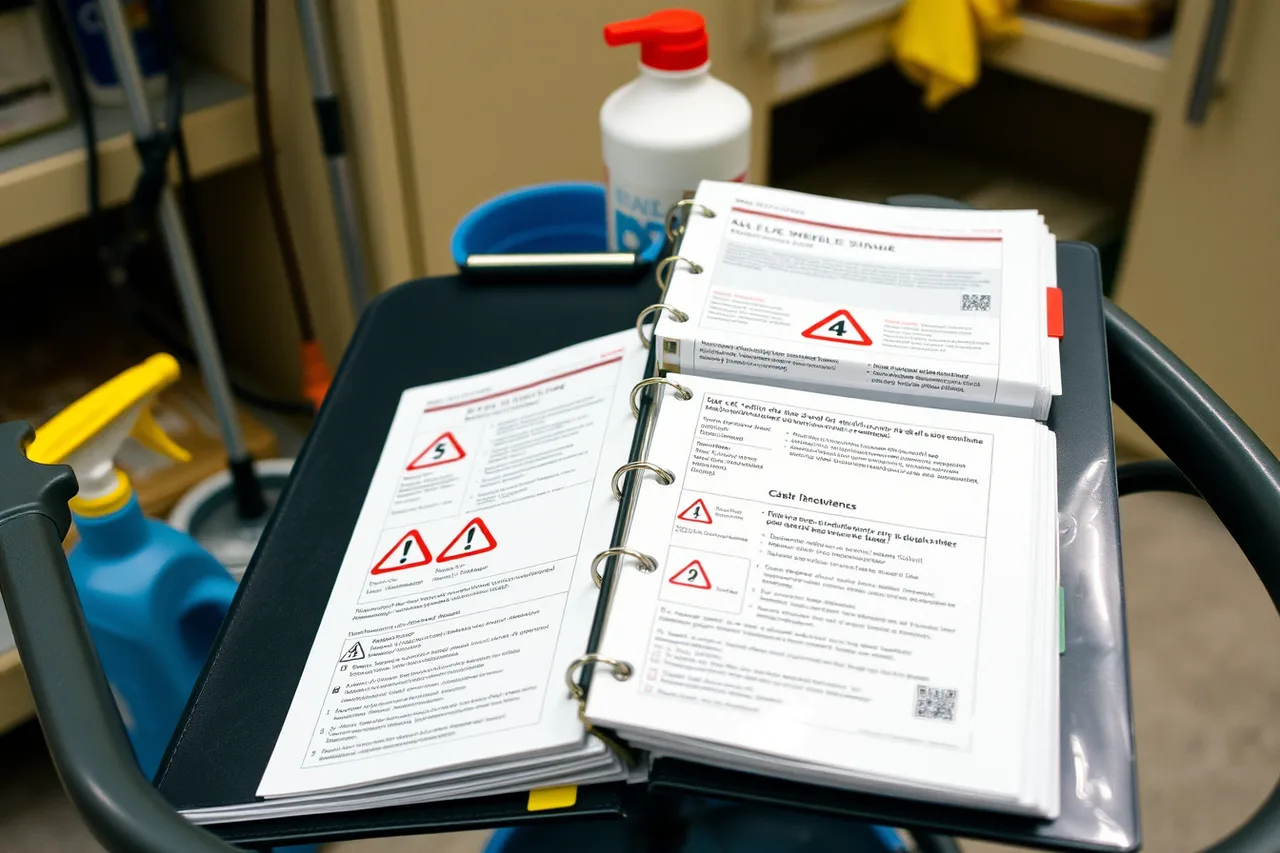
Job postings, offer letters, disciplinary notes and pay statements are staff-facing documents with language duties attached. A francophone cleaner who cannot read the safety binder is a compliance problem, not a preference.
On the client side, the quote, the schedule, the inspection form and any reporting portal all count. If your field software ships English-only, you can keep the tool, but the outputs a client signs should be available in French.
Privacy sits underneath all of it. Client contact lists, employee files and incident records are personal information. The Office of the Privacy Commissioner's guidance on Privacy laws in Canada explains how PIPEDA and the provincial rules apply.
If you are still assembling your first document set, the compliance checklist for new owners is a sensible starting point before you add the Quebec language layer.
Hiring and managing staff under the Charter
Hiring in Quebec means the usual employment standards plus language duties. Job titles, postings and interview documents should be French or bilingual. Requiring English as a condition of hire needs a justification tied to the actual duties.
Managing staff adds a second layer. Written warnings, performance reviews and termination letters should be in French unless the employee has agreed otherwise. An employee who signs an English document they cannot read can challenge it later.
Wages, hours, overtime and leave follow Quebec employment standards, and the documents that record them follow the language rules. The provincial Hiring and managing staff resource sets out those obligations from hiring through record keeping.
CNESST handles workplace health and safety and workers' compensation in Quebec. Incident reports, prevention programs and return-to-work files should be in French for the staff who use them.
Payroll, GST and QST remittances run through the Canada Revenue Agency and Revenu Quebec. Bill 96 does not change those filings, but it does change the language of the documents around them. Confirm filing obligations with a chartered professional accountant.
Drafting bilingual cleaning contracts clause by clause
A bilingual contract is two documents that must say the same thing. Draft the French version first, then translate, so the French text is not a compressed summary of the English.
These are the clauses that cause trouble when the two versions drift apart:
Clause / What to watch
- Language of contract
- State that the parties chose French, or record the express choice of English
- Notices
- Name how notices are given and in which language each party receives them
- Scope and schedule
- Keep frequencies, square footage and task lists identical in both texts
- Training and safety
- Require French-language training material for staff who need it
- Termination
- Match notice periods and cure rights word for word
- Governing law
- Confirm Quebec law and the correct forum for disputes
Add a language clause that names which version prevails if the two ever conflict. Without it, a dispute over one mistranslated scope line becomes a dispute about the contract itself.
Insurance and indemnity wording needs the same care. Certificates and endorsements usually arrive in English, so reference them by policy number rather than retyping the wording in French.
A worked example: a Montreal property manager receives and reads the French version of a three-year janitorial agreement. The parties then expressly choose to be bound by the English version, and the choice is documented. The schedule annexes are bilingual with matching figures. The monthly inspection report goes out in French with an English copy on request. That structure follows the language-choice process.
Pricing is a separate exercise. The commercial cleaning quote template covers what to include and what to charge, and its line items should read identically in both language versions.
This article describes what the Charter requires, not what your contract should say. Have a Quebec business lawyer review the language clause and the governing-version wording before you sign.
OQLF enforcement and records
The OQLF receives complaints and inspects businesses for Charter compliance. Complaints tend to come from employees, customers or competitors rather than from proactive audits.
The OQLF may investigate complaints and inspect businesses for Charter compliance. If it identifies a breach, it may seek correction. Respond promptly to OQLF communications and keep records of the steps taken.
The practical response is a paper trail: dated French versions, written language-choice records and staff training records. When an inspector asks, you want documents.
CNESST and the OQLF are separate bodies with separate files. A CNESST incident investigation does not trigger a language inspection, but documents produced in one can surface in the other.
Broader operating requirements, from permits to hiring, are collected under Business and industry on Canada.ca. Federal acts relevant to a specific contract can be located through the Consolidated Acts index.
Practical steps for Montreal and Quebec City operations
Montreal and Quebec City carry the densest French-language environment in Canada, and clients there notice gaps quickly. Institutional clients, school boards and health networks often apply stricter internal expectations than the Charter minimum.
Work through this checklist before your next contract renewal:
- Confirm which contracts are standard-form and therefore require a French original
- Add a language clause naming the governing version and the parties' choice
- Translate quotes, schedules, inspection forms and invoices into French
- Review exterior and vehicle signage for markedly predominant French
- Translate training material, safety data sheets and WHMIS content
- Record each client's language choice in writing and file it
- Brief supervisors on French-language notices and disciplinary documents
Then close the gaps in this order:
- Inventory every client-facing and staff-facing document and mark its current language.
- Draft or commission French versions, starting with the contract template and safety material.
- Add the language clause and a written record of the parties' express choice to your standard package.
- Train supervisors on when French is required and when a recorded choice allows English.
- Set a review cycle so new documents are drafted bilingually rather than retrofitted.
Day-to-day delivery still has to run. The commercial cleaning operations workflow is where scheduling, inspections and staffing meet these language duties in practice.
Longer term, language compliance belongs in your planning documents rather than in a folder of translations. The commercial cleaning business plan is a reasonable place to record how you handle bilingual contracts, training and client communication as the firm grows.
Common questions
Does Bill 96 mean every cleaning contract in Quebec must be in French?
French is the default for standard-form contracts, which covers most janitorial agreements. A client can expressly choose English, but that choice should be documented rather than assumed. Have a Quebec business lawyer confirm how the rule applies to your template.
What happens if only the English version is signed?
The contract may be challenged and the OQLF can require correction. A signed written record of the parties' express language choice helps document the process. It does not remove all risk, so keep the record with the contract file.
Do vehicle decals and uniforms count as signage?
Yes, when they carry your name or a trade description. French must be markedly predominant wherever both languages appear. A small French line under a large English logo does not meet that test.
Who enforces these rules, and does this apply outside Montreal?
The OQLF enforces the Charter of the French Language, while CNESST handles workplace health and safety and compensation separately. The Charter applies across Quebec, though client expectations run stricter in Montreal and Quebec City.