Guides
Equipment a commercial cleaning business cannot open without
A tick-box equipment checklist for cleaning owners covers carts, route spares, periodic machines, and the paperwork that has to travel with them.
What to take away
- Tick an item only when it is physically present, inspected, and has a named person responsible for it.
- Buy to the stage your signed contracts have reached, not the stage you hope to reach.
- The nightly cart is finished when one worker can clean one building's whole scope without walking back to the vehicle.
- Route spares exist so a single belt failure does not cost an account.
- Every chemical on the cart needs its safety data sheet filed and its label intact before the first shift.
How to use this checklist
Each line has three parts: the item, the person who inspects it, and the date of the last check. If you cannot name the person, the line is not done.
The equipment and setup guide covers which machine suits which floor. This page is the list you carry into the supply house.
Stage one: one cart, one building
- Commercial cart with a locking cabinet, bag holder, and tool rail.
- Vacuum matched to the first building's floor type, with spare bags or a clean filter.
- Mop bucket with wringer; flat or string mops colour-sorted so restroom mops never touch kitchen floors.
- Microfiber cloths in enough colours to keep restroom cloths separate from food-area cloths.
- Chemical caddy with bottles labelled to the manufacturer's data sheet and your written program.
- Gloves, eye protection, and whatever else the products on the cart call for.
- Liners in every size the building's stations take, with the count per night written down.
- Extension duster, entry-glass squeegee, and a putty knife for gum and labels.
- Small toolkitscrewdriver, pliers, dispenser key, spare bulbs if the scope includes them.
- Wet-floor signs, enough to cover every mopped area at once.
- Key log and alarm-code card carried on the person, never left on the cart.
Stage two: a route of three or more sites
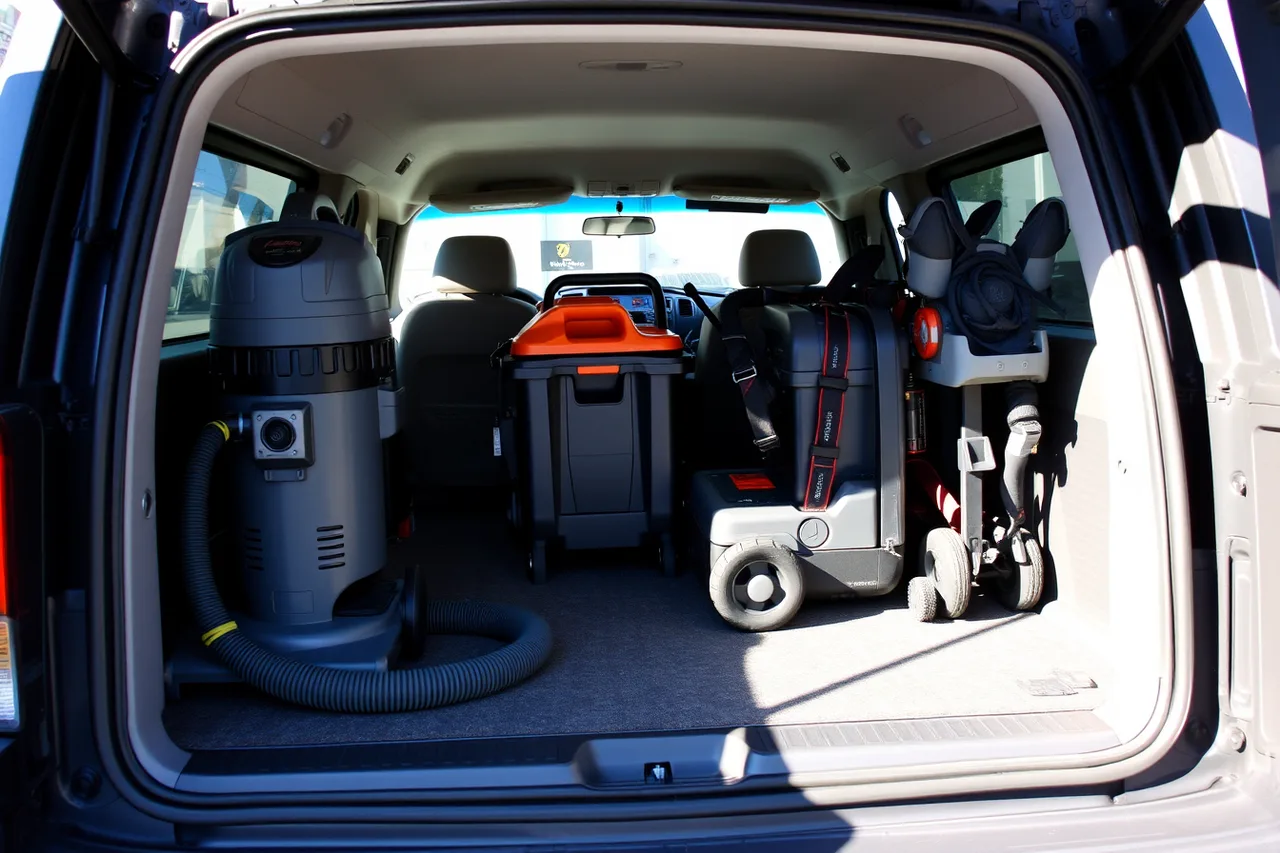
- Second vacuum, ready to swap, plus a spare belt or filter for each model.
- Spare batteries or a corded fallback for every cordless tool.
- Second cart for two-person nights at the largest site.
- Vehicle that carries the full route kit without repacking, with tie-downs for machines.
- Scheduling and inspection system, software or paper, that records the task, the site, and the night.
- Inspection sheet per building, matched line by line to the contract scope.
- First-aid kit in the vehicle, checked monthly.
Stage three: periodic work, one machine at a time
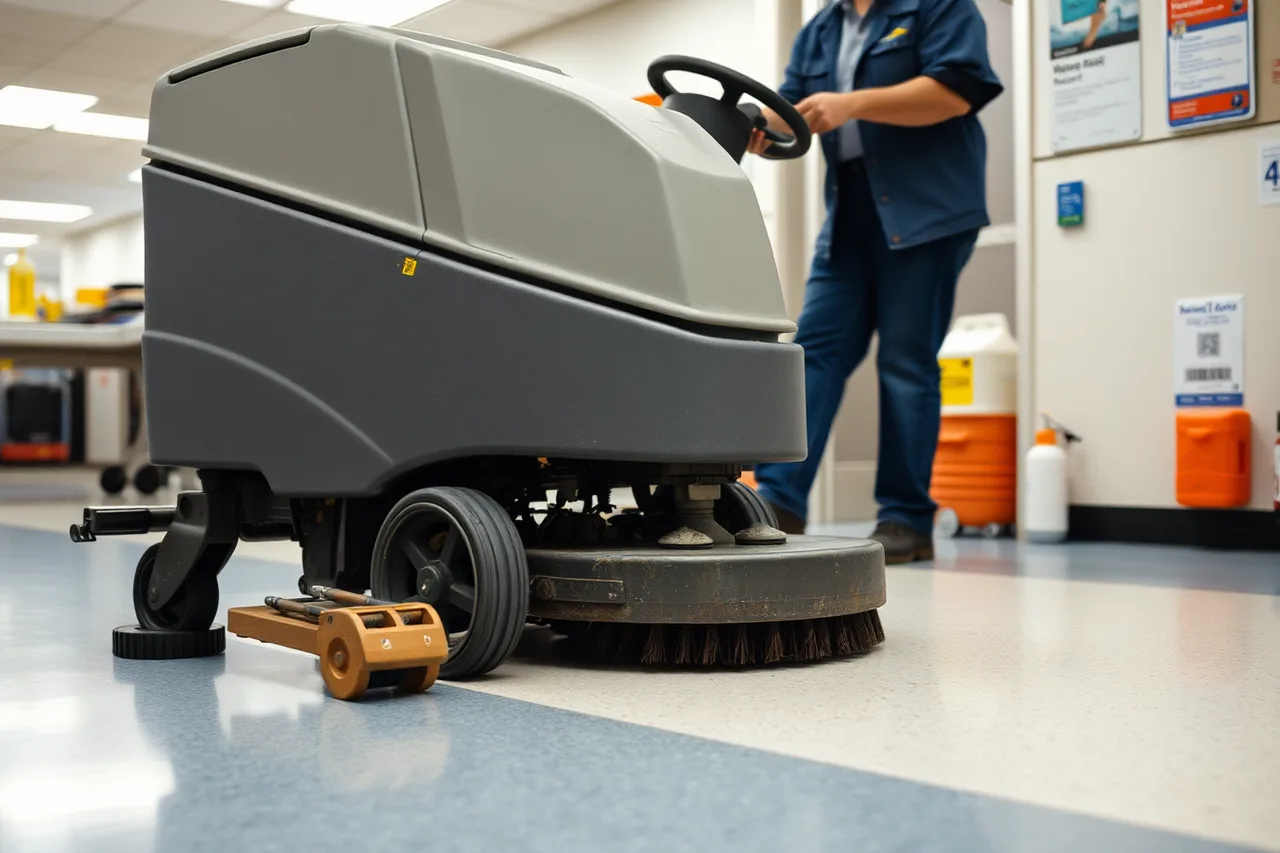
- Signed scope that includes the periodic work at a price that funds the machine.
- Machine matched to the floor in that scope, run under load before you pay for it.
- Pads, brushes, and chemicals for that machine, with data sheets filed.
- Operator trained on it in writing, by the supplier or a named staff member.
- Charging or storage spot confirmed with the customer, on site or in the vehicle.
- Maintenance date on the calendar with a name beside it.
Paperwork that travels with the equipment
The chemical lines above carry obligations this page will not state as rules. They depend on your headcount, your products, and your jurisdiction.
OSHA's Hazard Communication Standard is the source text for what covered employers owe workers about hazardous chemicals. Ask a safety consultant whether it covers your business, what your written program must contain, which data sheets you keep, and how caddy bottles must be labelled.
OSHA's cleaning industry page lists the hazard categories the agency ties to this work. Build your question list from it.
OSHA's safety and health program page describes finding and fixing hazards before injury. For a new owner that is a monthly walk of the vehicle and the carts, list in hand.
Jurisdictions that add rules of their own, from waste handling to registration tied to the products you use, are covered in the licensing and compliance guide.
Training the people who use the kit is in the hiring and training guide. The order the cart moves through a building is in the operations and workflow guide.
Items that look necessary and can wait
| Item | Why it can wait | What triggers it |
|---|---|---|
| Floor scrubber or burnisher | No periodic scope is signed | Stage three |
| Vehicle wrap and signage | The route is not full | A route that can take more accounts near it; see the marketing and growth guide |
| Pressure washer | Exterior work is rarely inside a janitorial scope | A written customer request |
| Truck-mounted extractor | Portable units serve small carpeted offices | A carpet program across several sites |
| Uniforms beyond a clean shirt with a name | Nobody sees a night crew | A day porter post |
Common questions
Do I need a vehicle before the first contract?
Not if the nightly cart fits in what you already drive, and most do. The vehicle decision arrives with the route, not with the first building.
How many carts per crew?
One per worker on the shift, plus one spare once the route reaches three sites. Two people on one cart means one of them is walking back for something.
Should chemicals stay on site?
Only in a lockable closet the customer has agreed to, stored as the data sheet and your program require. Otherwise they ride in the caddy, and the caddy comes home with the worker.
What is the first thing that fails?
Vacuums, usually a belt or a clogged filter on a busy night. The stage-two spare exists for exactly that night, which is why it is bought before the third account, not after.