Guides
Commercial cleaning equipment costs: new against used
New and used commercial cleaning equipment compared on cost per working hour, with real price ranges and a load test for used floor machines.
What to take away
- Commercial cleaning equipment costs, new against used, turn on cost per working hour. Nightly kit barely moves the number: a ProTeam ProForce 1500XP or Sanitaire SC888 upright lists at $300 to $600 new, and a used one at $150 saves about a fortnight of one contract's margin.
- Floor machines hold the money. A walk-behind auto-scrubber such as a Tennant T300, a Karcher B 40 W Bp or a Nilfisk SC250 runs $4,000 to $9,000 new and $1,200 to $4,000 used, so the choice is real.
- Total cost is purchase plus parts plus the labor hours the machine takes off the route plus the nights it fails at a keyed site. Only the first appears on the invoice.
- Test any used machine under load, on your floor type, long enough to see the battery sag and the motor warm up.
- A used machine with no local parts source is a future paperweight whatever the price. Confirm that Tennant, Nilfisk and Karcher parts reach your market before you pay.
Cost per working hour, with worked numbers
The figures here are illustrative ranges from published dealer and auction listings, not quotes. Your region and supplier will move them. The relationship is what transfers.
Cost per working hour
- A is the purchase price, new or used.
- R is the expected parts and repair cost over the years you keep the machine.
- Hm is the labor hours per year spent maintaining it, and W is the loaded hourly cost of that labor.
- Nf is the nights per year the machine is expected to fail on the route, and Cf is the cost of a failed night: rework, the credit to the customer, and the risk to the account.
- U is utilizationhours the machine works divided by hours it is available.
Total annual cost is (A divided by years kept) plus R plus (Hm times W) plus (Nf times Cf). Cost per working hour is that total divided by working hours.
U is where a cheap machine loses. A $1,500 used scrubber that sits idle four nights a week costs more per working hour than a $7,000 new one running nightly. Compare new and used on cost per working hour, never on A.
Run the arithmetic on two machines. A new Tennant T300 at $7,000, kept five years, is $1,400 a year in capital. Add $400 a year in consumables such as brushes and hoses, 30 maintenance hours at a $22 loaded rate ($660), and one failed night at $500. Total: $2,960.
Run nightly at two hours a night for 250 nights, and that machine works 500 hours at $5.92 an hour.
Now the used one: a $2,500 scrubber with three years of life left, $1,200 a year in parts, 70 maintenance hours ($1,540) and four failed nights ($2,000). Total: $5,573.
Idle four nights a week, it works 300 hours a year, so $18.58 an hour. The cheaper machine costs roughly three times more per working hour.
Where new and used land, by machine type
Where new and used land
Typical new
- Commercial upright vacuum (ProTeam ProForce 1500XP, Sanitaire SC888)
- $300 to $600
- Backpack vacuum (ProTeam Super CoachVac, ProTeam GoFree Flex Pro)
- $350 to $700
- Wet-dry vacuum (Shop-Vac, Nilfisk Aero)
- $200 to $800
- Low-speed swing machine (Karcher BDS 43/180 C, Advance 612)
- $900 to $1,800
- Burnisher (Karcher BDP 50/1500 C, Minuteman)
- $1,200 to $3,500
- Auto-scrubber, walk-behind (Tennant T300, Karcher B 40 W Bp, Nilfisk SC250)
- $4,000 to $9,000
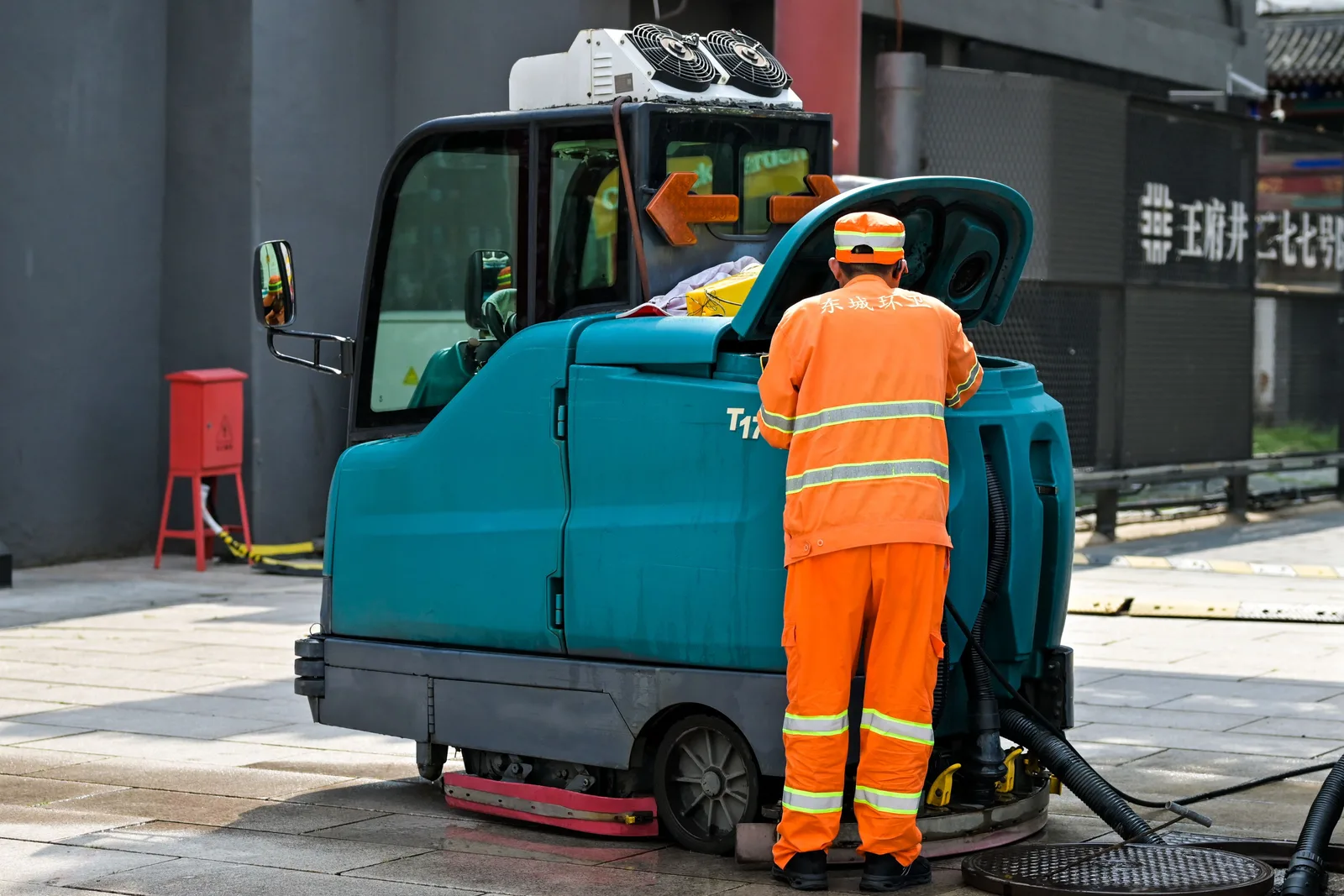
- Ride-on scrubber (Tennant T17, Karcher B 90 R Bp)
- $12,000 to $30,000
- Carpet extractor, portable (Mytee HP60 Spyder, CFR)
- $1,500 to $4,000
- Autonomous scrubber (Ice Cobotics Cobi 18)
- Typically $25,000 to $40,000, also sold on a monthly subscription
Typical used
- Commercial upright vacuum (ProTeam ProForce 1500XP, Sanitaire SC888)
- $100 to $250
- Backpack vacuum (ProTeam Super CoachVac, ProTeam GoFree Flex Pro)
- $150 to $350
- Wet-dry vacuum (Shop-Vac, Nilfisk Aero)
- $80 to $300
- Low-speed swing machine (Karcher BDS 43/180 C, Advance 612)
- $300 to $800
- Burnisher (Karcher BDP 50/1500 C, Minuteman)
- $500 to $1,500
- Auto-scrubber, walk-behind (Tennant T300, Karcher B 40 W Bp, Nilfisk SC250)
- $1,200 to $4,000
- Ride-on scrubber (Tennant T17, Karcher B 90 R Bp)
- $5,000 to $15,000
- Carpet extractor, portable (Mytee HP60 Spyder, CFR)
- $600 to $1,800
- Autonomous scrubber (Ice Cobotics Cobi 18)
- Rarely listed used
Used is sound when
- Commercial upright vacuum (ProTeam ProForce 1500XP, Sanitaire SC888)
- Parts are common and the motor tests strong
- Backpack vacuum (ProTeam Super CoachVac, ProTeam GoFree Flex Pro)
- Harness and filters are replaceable
- Wet-dry vacuum (Shop-Vac, Nilfisk Aero)
- Motor pulls full amps and filters are stocked
- Low-speed swing machine (Karcher BDS 43/180 C, Advance 612)
- Motor and gearbox test smoothly under a pad
- Burnisher (Karcher BDP 50/1500 C, Minuteman)
- Battery or cord, motor, and pad driver check out
- Auto-scrubber, walk-behind (Tennant T300, Karcher B 40 W Bp, Nilfisk SC250)
- Batteries are new or tested and squeegee blades are available
- Ride-on scrubber (Tennant T17, Karcher B 90 R Bp)
- A dealer has serviced it and will keep serving it
- Carpet extractor, portable (Mytee HP60 Spyder, CFR)
- Pump and heater test at full pressure
- Autonomous scrubber (Ice Cobotics Cobi 18)
- The dealer keeps the service and mapping contract
The equipment and setup guide explains why floor machines are bought only against a signed scope; this table assumes that scope exists.
New vs used equipment prices
Machine
- Upright vacuum
- $300-$600
- Backpack vacuum
- $350-$700
- Swing machine
- $900-$1,800
- Burnisher
- $1,200-$3,500
- Walk-behind scrubber
- $4,000-$9,000
- Ride-on scrubber
- $12,000-$30,000
- Carpet extractor
- $1,500-$4,000
Typical new
- Upright vacuum
- $100-$250
- Backpack vacuum
- $150-$350
- Swing machine
- $300-$800
- Burnisher
- $500-$1,500
- Walk-behind scrubber
- $1,200-$4,000
- Ride-on scrubber
- $5,000-$15,000
- Carpet extractor
- $600-$1,800
Typical used
- Upright vacuum
- Backpack vacuum
- Swing machine
- Burnisher
- Walk-behind scrubber
- Ride-on scrubber
- Carpet extractor
The test-under-load protocol for a used machine
Test-under-load protocol
- Ask for the machine's historyhours if it has a meter, service records, and why it is being sold. A dealer trade-in with records is a different asset from a listing with a photo.
- Run it on the floor type you will use it on, with the pad or brush you will use, for at least as long as one real job. A five-minute demonstration on a showroom floor tells you nothing.
- Watch the battery under load. Put a conductance tester (Midtronics makes several) on the pack before and after the run. A pack that holds voltage for ten minutes and sags after thirty will strand you at a keyed site.
- Listen to the motor and gearbox as they warm up. Noise that appears after heat is the noise that ends nights.
- Check the squeegee, pad driver, hoses, and seals for wear, and price their replacement before you agree a figure. A Tennant or Karcher blade set is cheap; a discontinued pad driver is not.
- Confirm a parts source within a reasonable delivery time. No parts, no purchase.
- Confirm who will train your operator. A used machine with no manual and no training is a safety question as much as a cost one.
- Recompute the variables above with what you learned, and compare per working hour against new.
What new buys that used does not
The first thing new buys is a warranty with a supplier who answers the phone. Tennant, Nilfisk and Karcher machines typically carry 12 months of parts and labor cover. Dealer-used units often carry 30 to 90 days, and private sales carry none.
What new buys that used does not
New machine
- Warranty
- Supplier answers phone
- Training
- Included
- Chemical compatibility
- Manual specifies
- Safety
- Hazards addressed
Used machine
- Warranty
- No warranty
- Training
- Often missing
- Chemical compatibility
- Guesswork
- Safety
- Unknown condition
Operator training has a safety dimension: OSHA's safety and health program page describes finding and fixing hazards before injury. A machine the operator was never trained on is a hazard nobody found.
Known chemical compatibility: a new machine's manual says which products it tolerates, and matching that to the labels and data sheets your program keeps is easier than guessing on a used unit.
OSHA's Hazard Communication Standard page is the source for what covered employers owe workers about hazardous chemicals. Ask OSHA's resources or a safety consultant how it applies to the products your machines use.
OSHA's cleaning industry page lists hazard categories the agency associates with this work, including equipment hazards. The machine's condition is a worker-safety matter before it is a budget one.
What used buys that new does not
Time. A used machine bought this week for a scope starting next week lets you take the contract. A used Karcher BDS 43/180 C at $500 against $1,400 new, or a used ride-on at $6,000 against $18,000 new, frees capital for payroll and chemicals.
Lower capital at risk when a periodic line is tested for a quarter and might not be kept.
Running an older machine teaches an operator what wears and why, so the eventual new purchase is better.
Where this sits in the plan
The business plan for a cleaning company should show each machine with its trigger scope and its new-or-used decision, so a lender sees purchases tied to contracts. A $7,000 scrubber tied to a signed 12-month scope reads differently from a $2,500 auction win with no contract behind it.
The stage-by-stage list of what to own is in the equipment checklist for new owners, and the operator training that every machine needs is covered in the hiring and training guide.
Common questions
Is used equipment ever a mistake for nightly kit?
Rarely, if the vacuum motor tests strong and filters are available. A Sanitaire SC888 or ProTeam upright at $150 needs cheap belts and a stocked bag supply, and both are easy to find. The savings are small either way; buy what you can get a spare belt for.
How old is too old for a floor machine?
Age matters less than parts availability and hours under load. A ten-year-old Tennant or Nilfisk with a dealer behind it beats a three-year-old orphan.
Should I rent before buying?
For a periodic line you are testing, yes. Rent for the first jobs, learn the machine, and buy once the scope has renewed. Rental on a walk-behind scrubber typically runs $150 to $400 a day, or $600 to $1,200 a week, in most US markets.
What about buying from a cleaning company that is closing?
Often the best source: real machines with real history. Test under load anyway, and ask why they are closing before you copy their route.